Magical Marine Life Encounters
Lion's Mane Jellyfish in Koh Tao: An Unforgettable Ocean Encounter
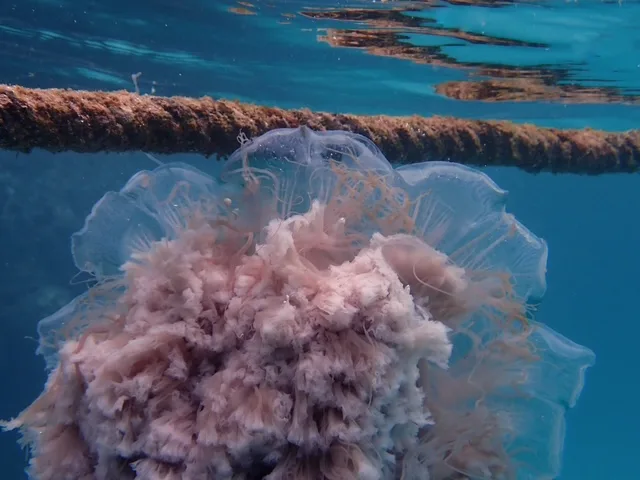
If you've spent any time on Koh Tao over the past few weeks, chances are you've heard someone talking about the Lion's Mane jellyfish. Since they first began appearing last month, sightings have been shared across social media, dive shops, and in local community groups.
Some people have been horrified by the thought of giant stinging jellyfish drifting through the island's waters. Others, especially underwater photographers, divers, and marine life enthusiasts, have been captivated by the opportunity to witness such unusual visitors.
I definitely fall into the second group.
What started as a surprising afternoon in the water became one of the most fascinating marine events I've experienced during my years living on Koh Tao.
My Encounter in Shark Bay
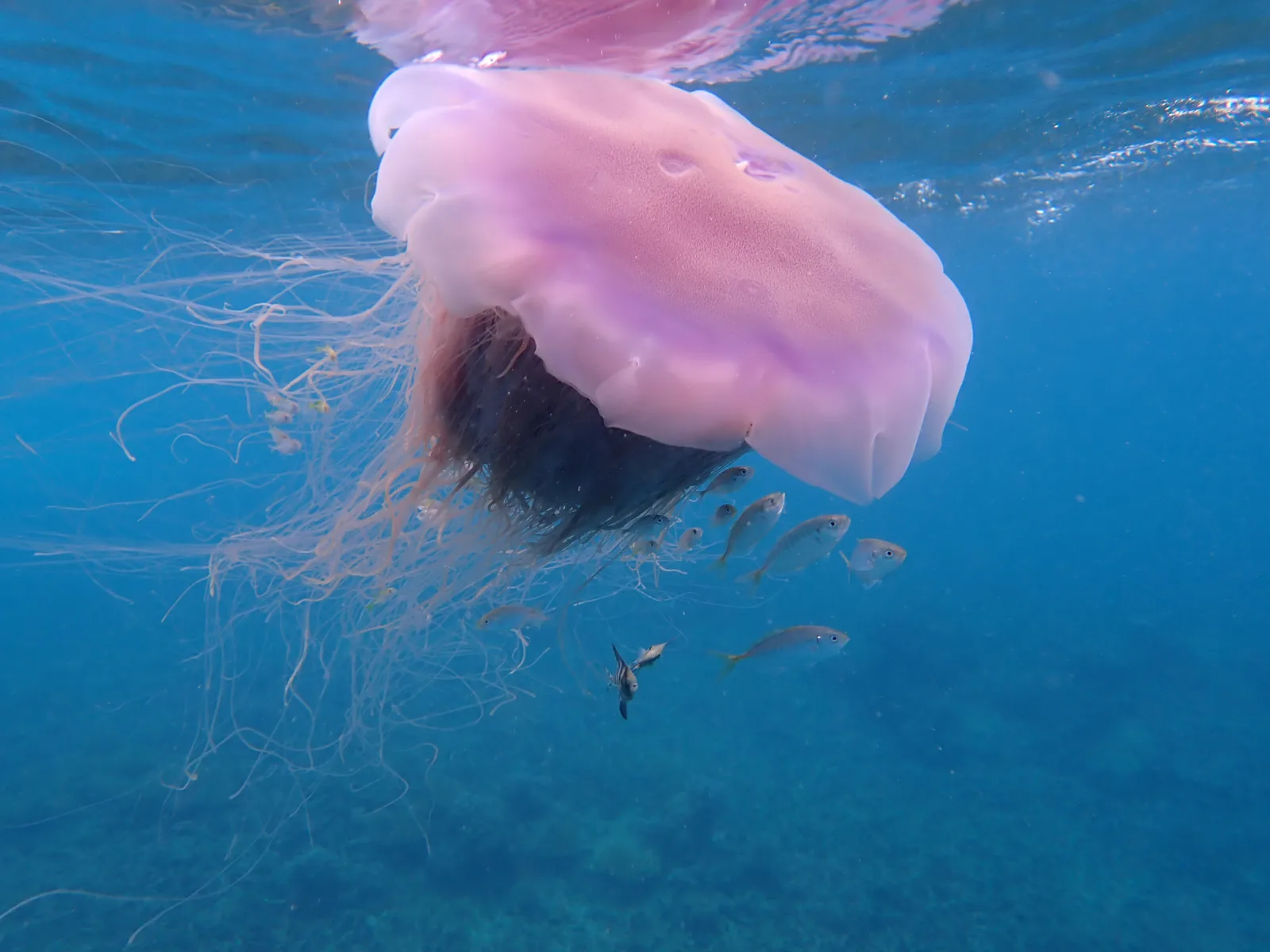
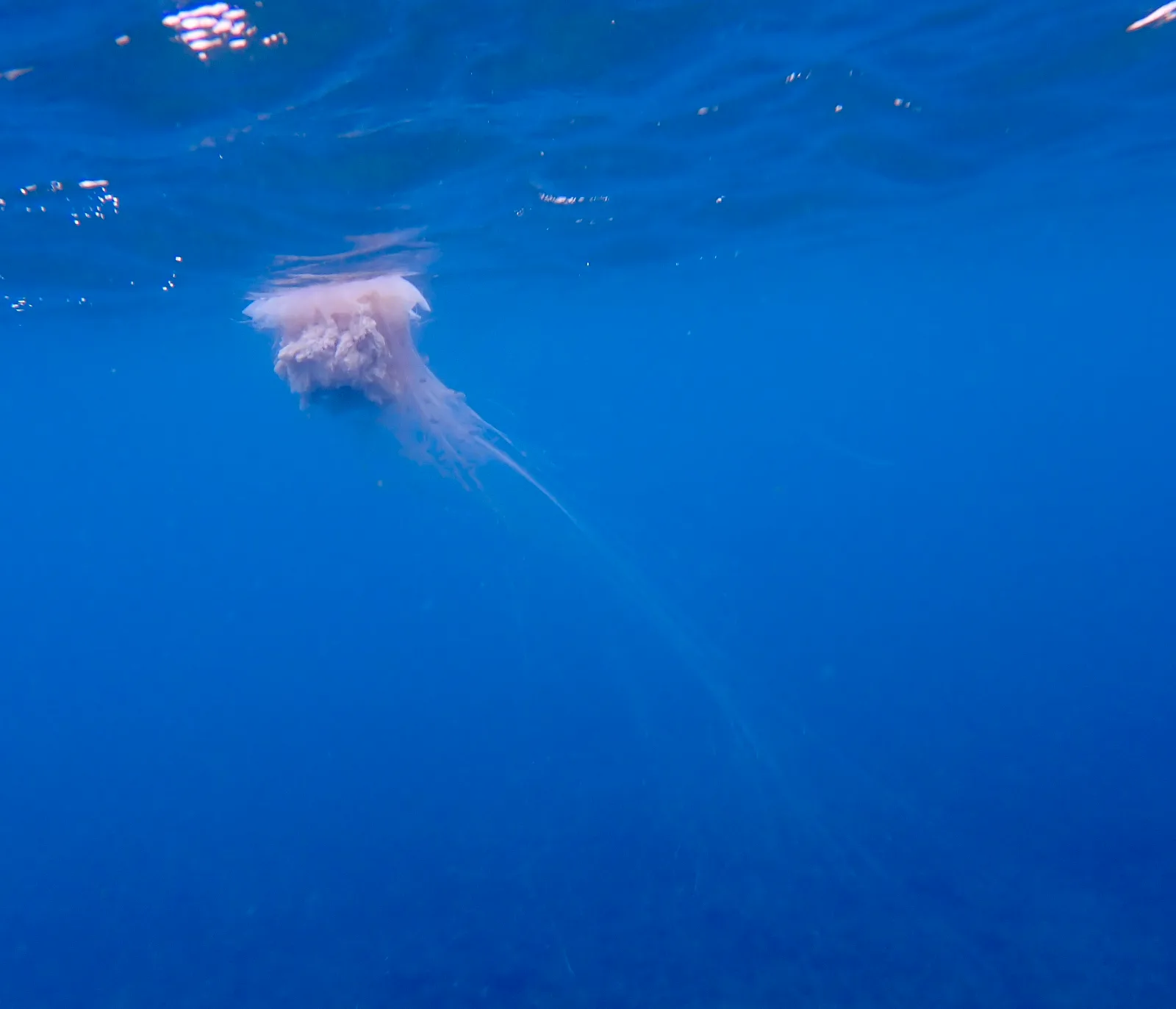
When I slipped into the water at Shark Bay that afternoon, I was expecting another routine snorkel in search of sea turtles. Instead, I found myself floating beside one of the most mesmerizing creatures I've ever encountered in Koh Tao. Gracefully drifting just beneath the surface, its soft pink bell and flowing tentacles seemed almost unreal.
Strangely enough, this wasn't my first lion's mane jellyfish sighting of the week.
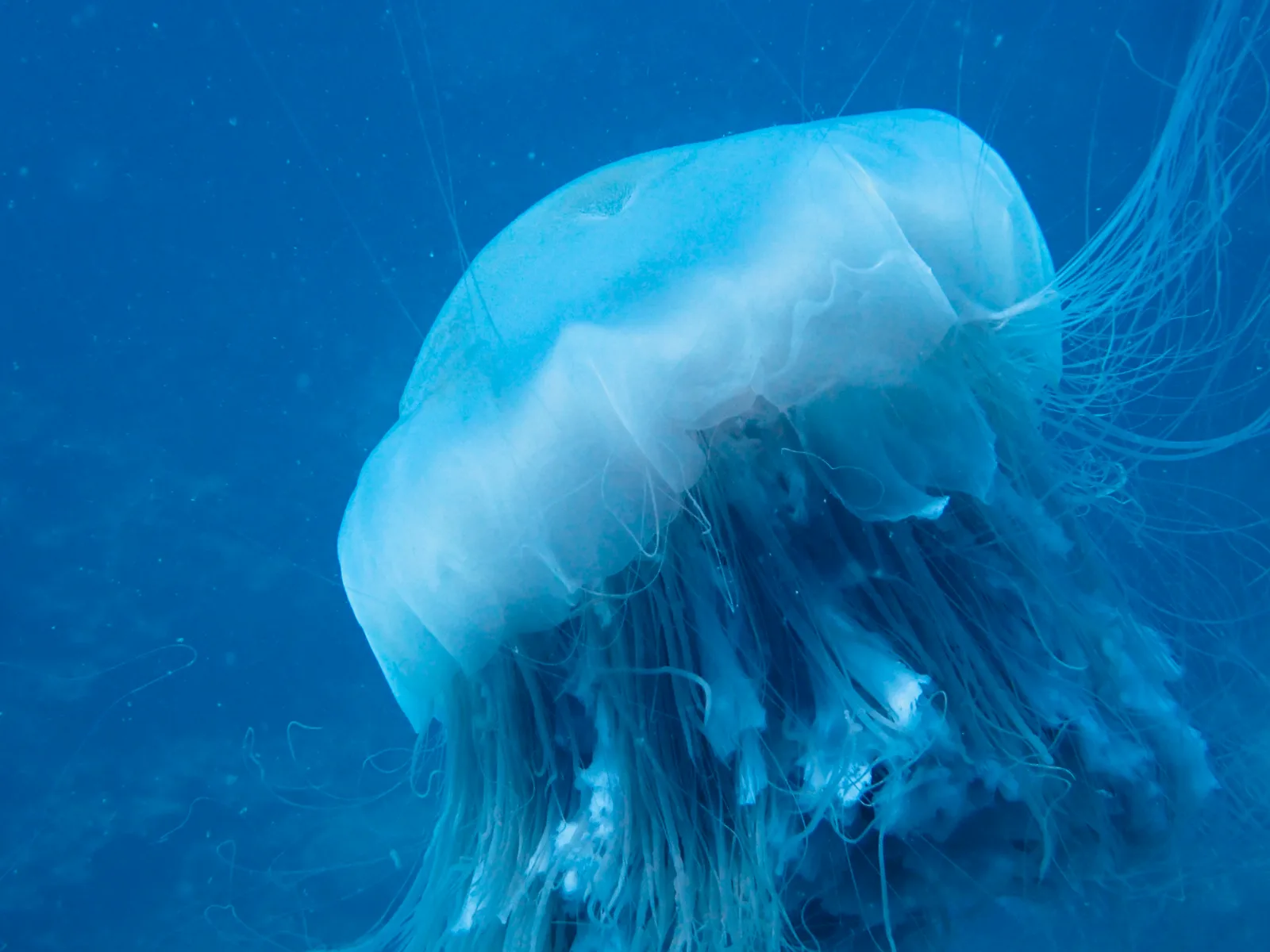
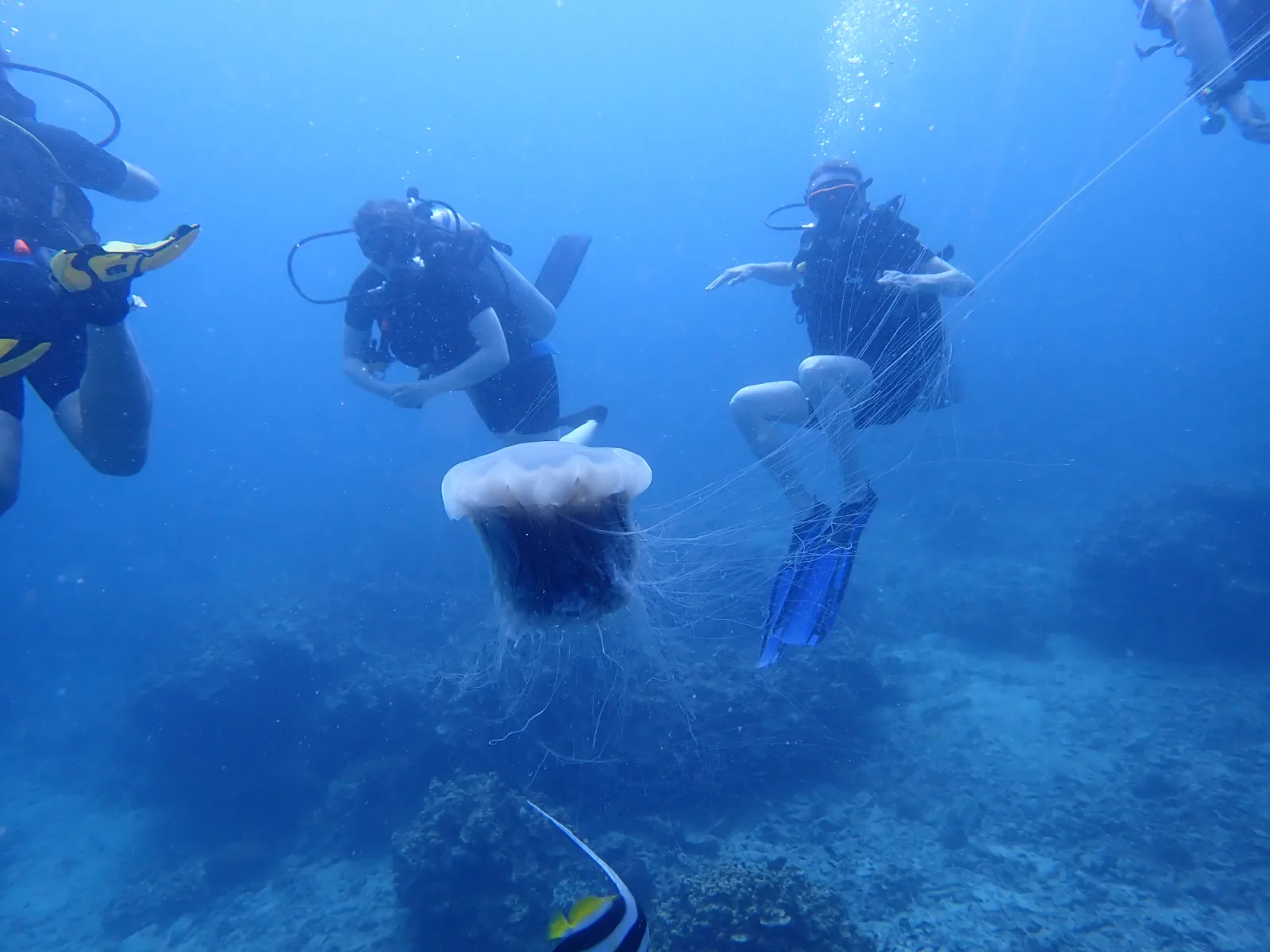
The day before, I had encountered one while scuba diving at Hin Wong Bay at a depth of about 12 meters (40 feet). Underwater, the jellyfish glowed in shades of blue, ranging from pale, translucent hues to deep sapphire tones. Against the darker water, it seemed almost ethereal as it drifted through the water column.
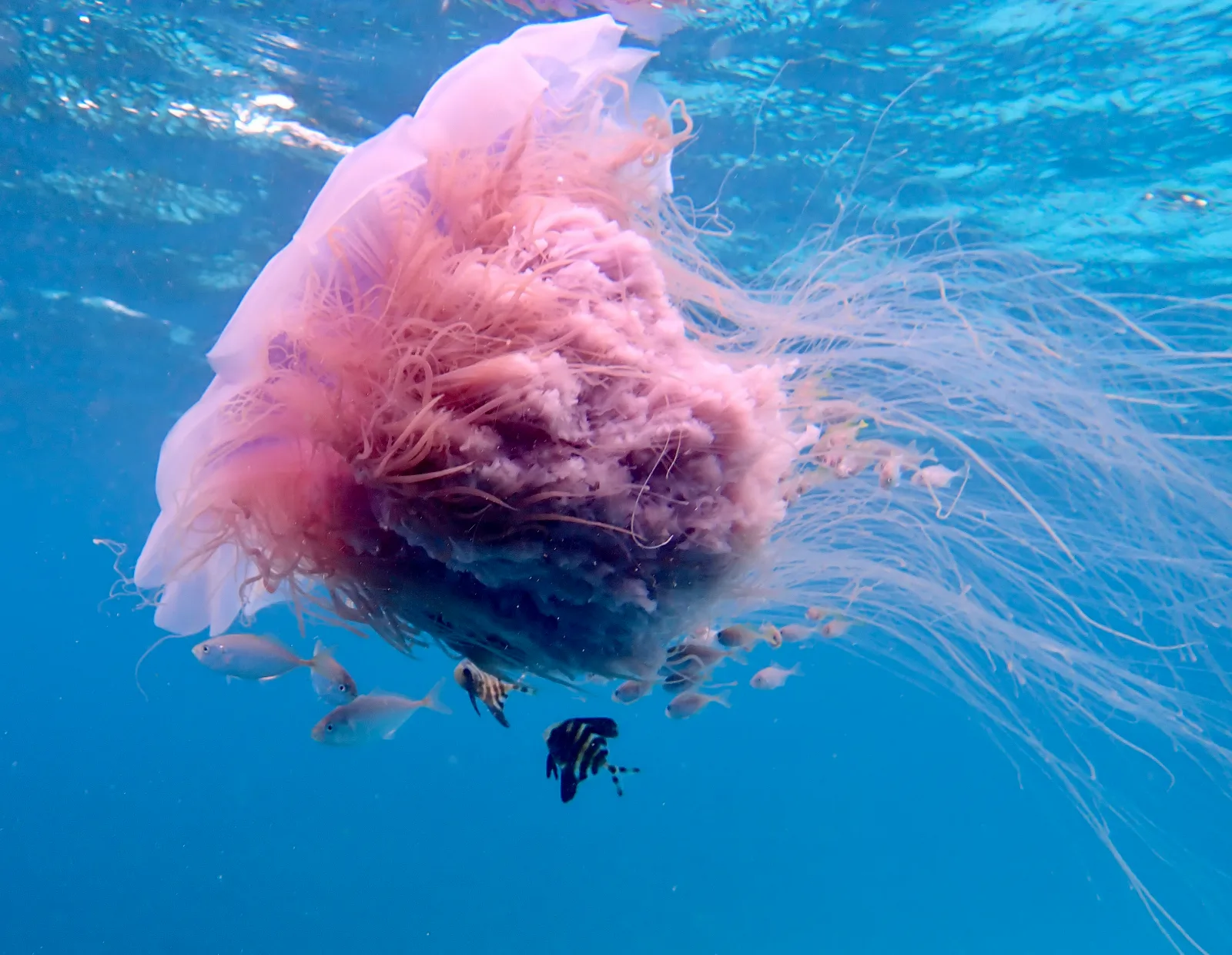
Less than 24 hours later, I found myself floating beside another lion's mane jellyfish just beneath the surface. Bathed in sunlight, the same graceful bell and flowing tentacles now shimmered in delicate shades of pink and rose. It was hard to believe I was looking at the same type of animal.
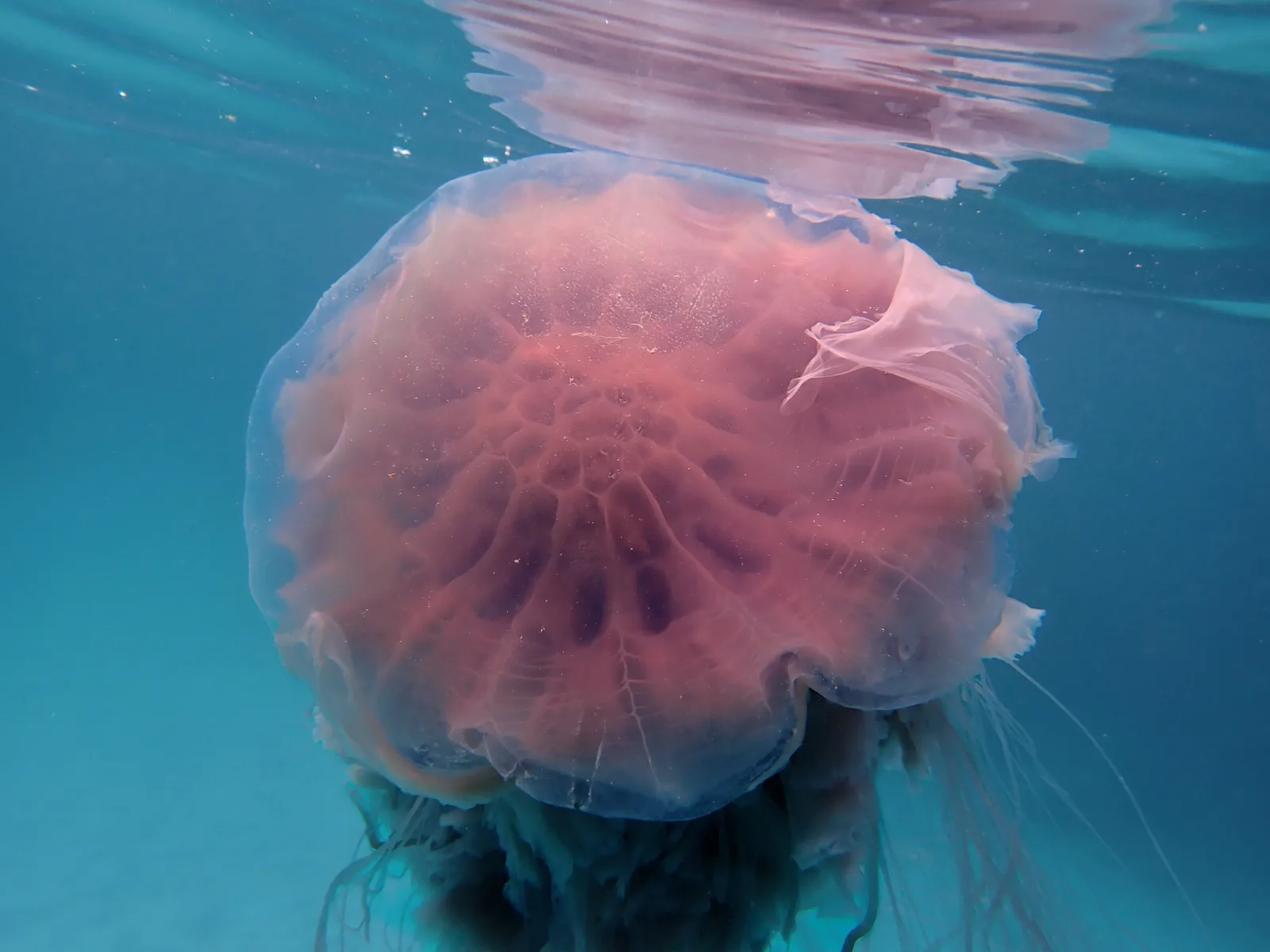
I stayed with it for more than 30 minutes, letting the current carry us together while I photographed it from every angle. The poor visibility and strong current that day had kept me from finding the sea turtles I'd hoped to see, but I quickly forgot about my original plan. Encounters like this are impossible to schedule. Sometimes the ocean offers something even more extraordinary than what you came looking for.
As I reviewed my photos later, I noticed something I hadn't fully appreciated in the moment. Tiny fish were darting among the jellyfish's tentacles, using its drifting canopy as both shelter and protection. It was a reminder that even a solitary jellyfish is part of a much larger story.
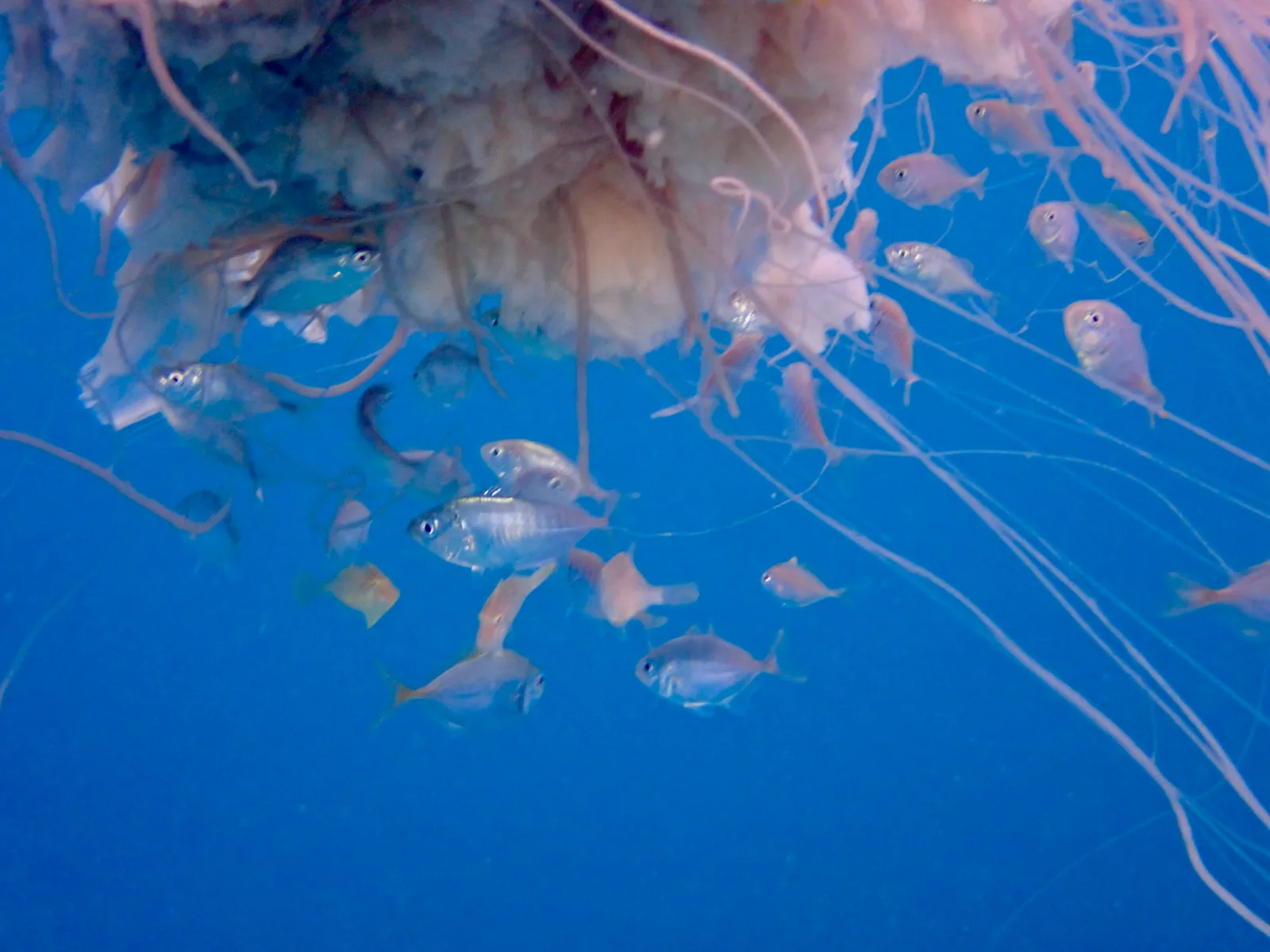
What Is a Lion's Mane Jellyfish?
The jellyfish appearing around Koh Tao have been identified as Cyanea buitendijki, a lesser-known tropical species of lion's mane jellyfish found in the Indo-Pacific, including the Gulf of Thailand.
Unlike the enormous lion's mane jellyfish found in colder northern waters, Cyanea buitendijki is much smaller. Its soft bell and masses of fine, flowing tentacles give it the beautiful mane-like appearance that makes it so mesmerizing underwater. Watching one glide effortlessly through the sea is like witnessing an underwater ballet.
Although the species has been known for more than a century, scientists are still learning about tropical lion's mane jellyfish. Recent research has helped clarify the classification of Cyanea buitendijki and distinguish it from other similar-looking species.
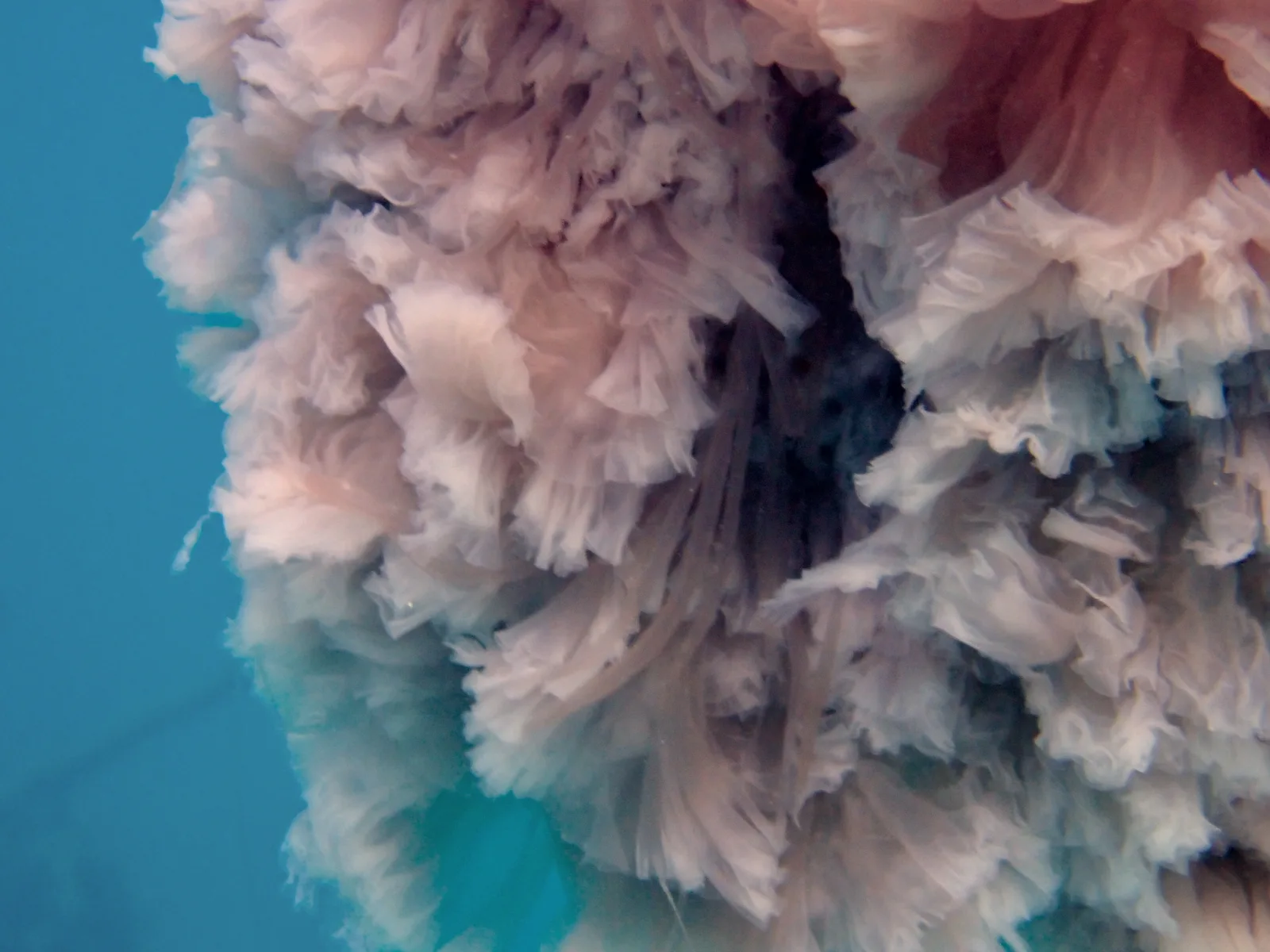
Why Are Lion's Mane Jellyfish Appearing Around Koh Tao?
Exactly why so many Cyanea buitendijki have appeared around Koh Tao isn't clear.
Ocean currents, rainfall, water temperature, food availability, and seasonal conditions can influence jellyfish numbers and movements. Rather than a single cause, it may simply be the right combination of circumstances bringing unusually large numbers into the waters around the island.
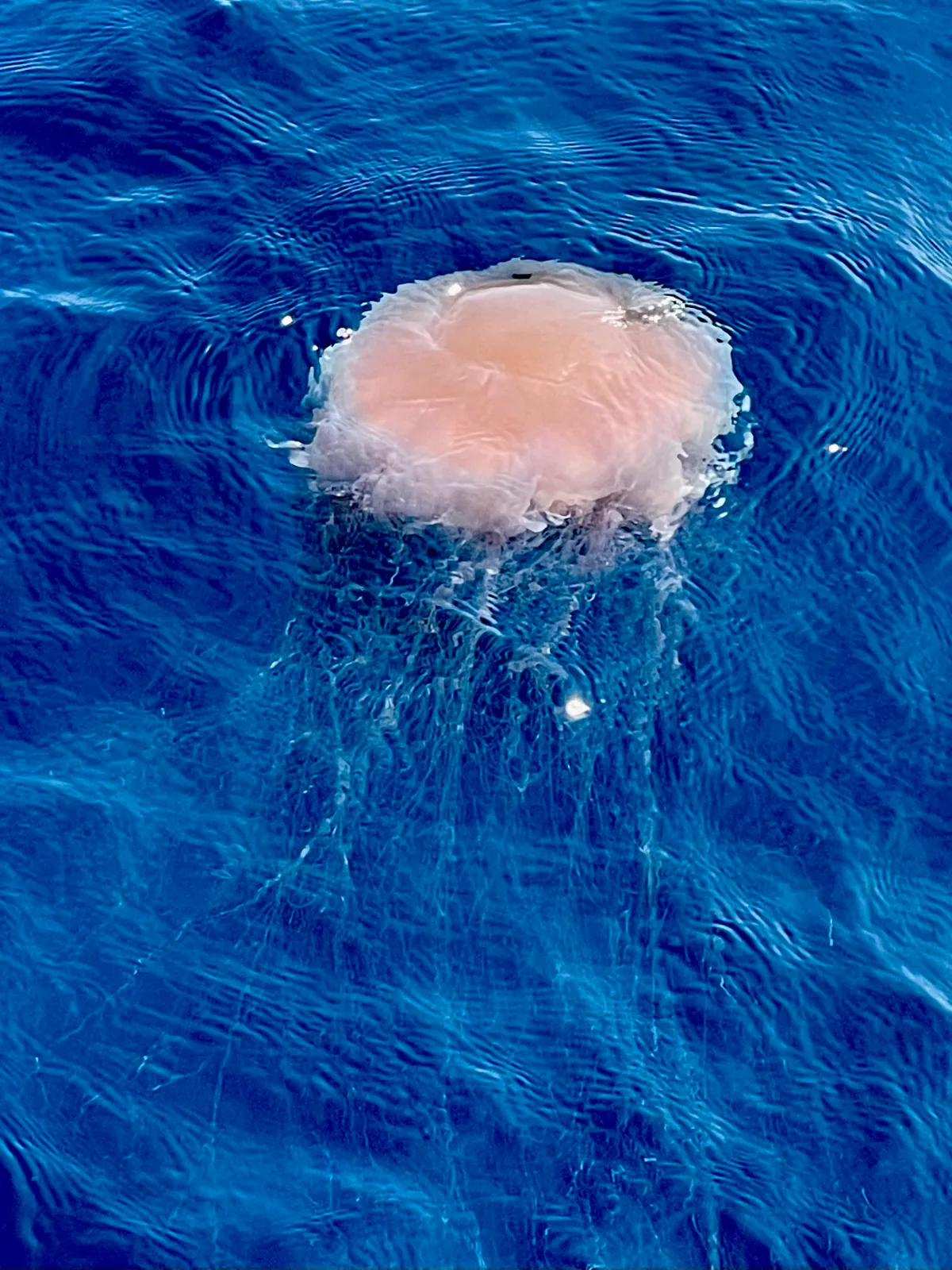
Whatever the reason, their appearance has given divers and snorkelers around Koh Tao a rare opportunity to encounter this fascinating species.
My Third Encounter: The Bloom Begins to Fade
Weeks after my first encounter, I found myself face-to-face with Lion's Mane jellyfish again while snorkeling at Sai Thong. This time, the bloom seemed to be entering a new phase.
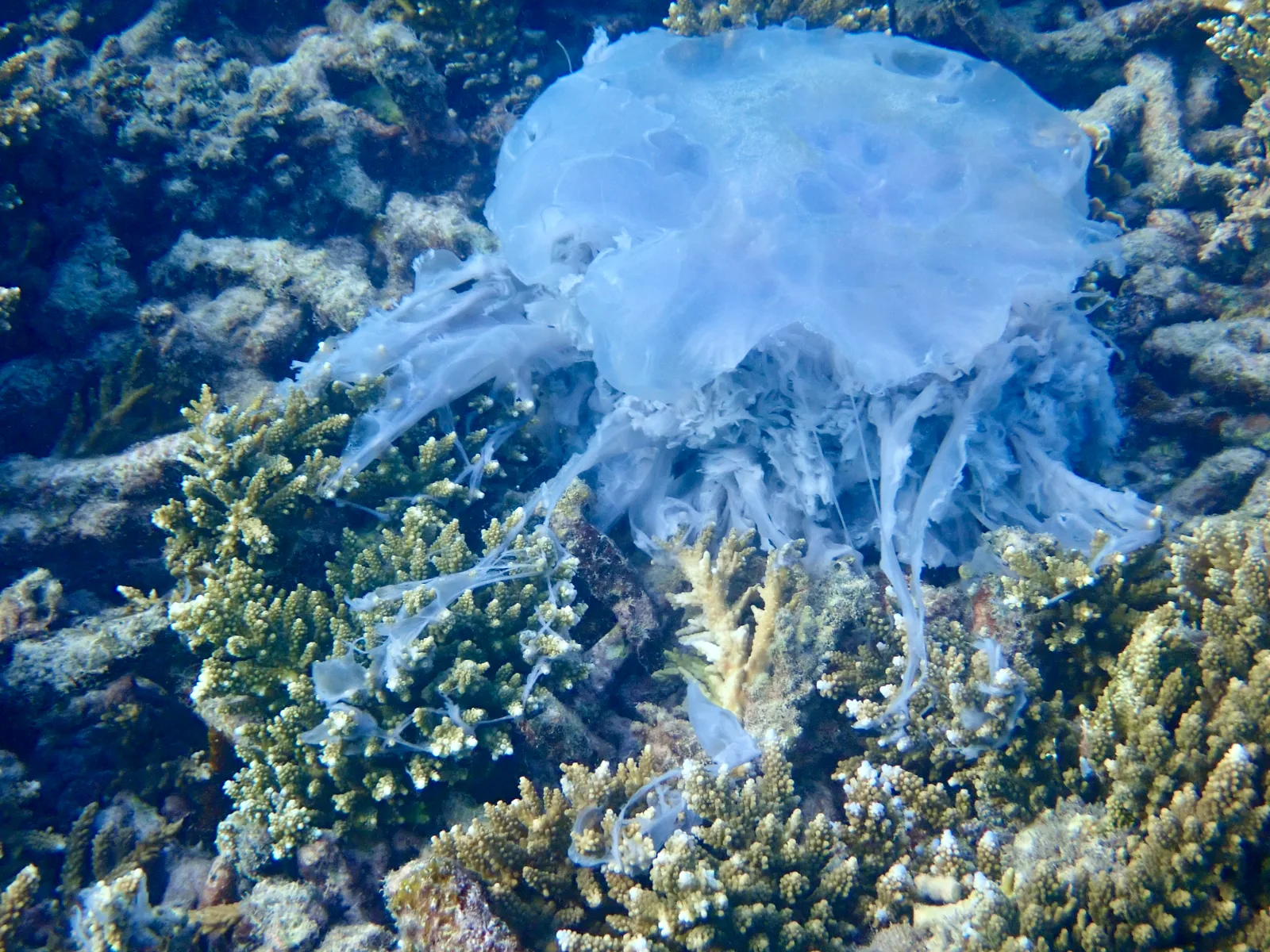
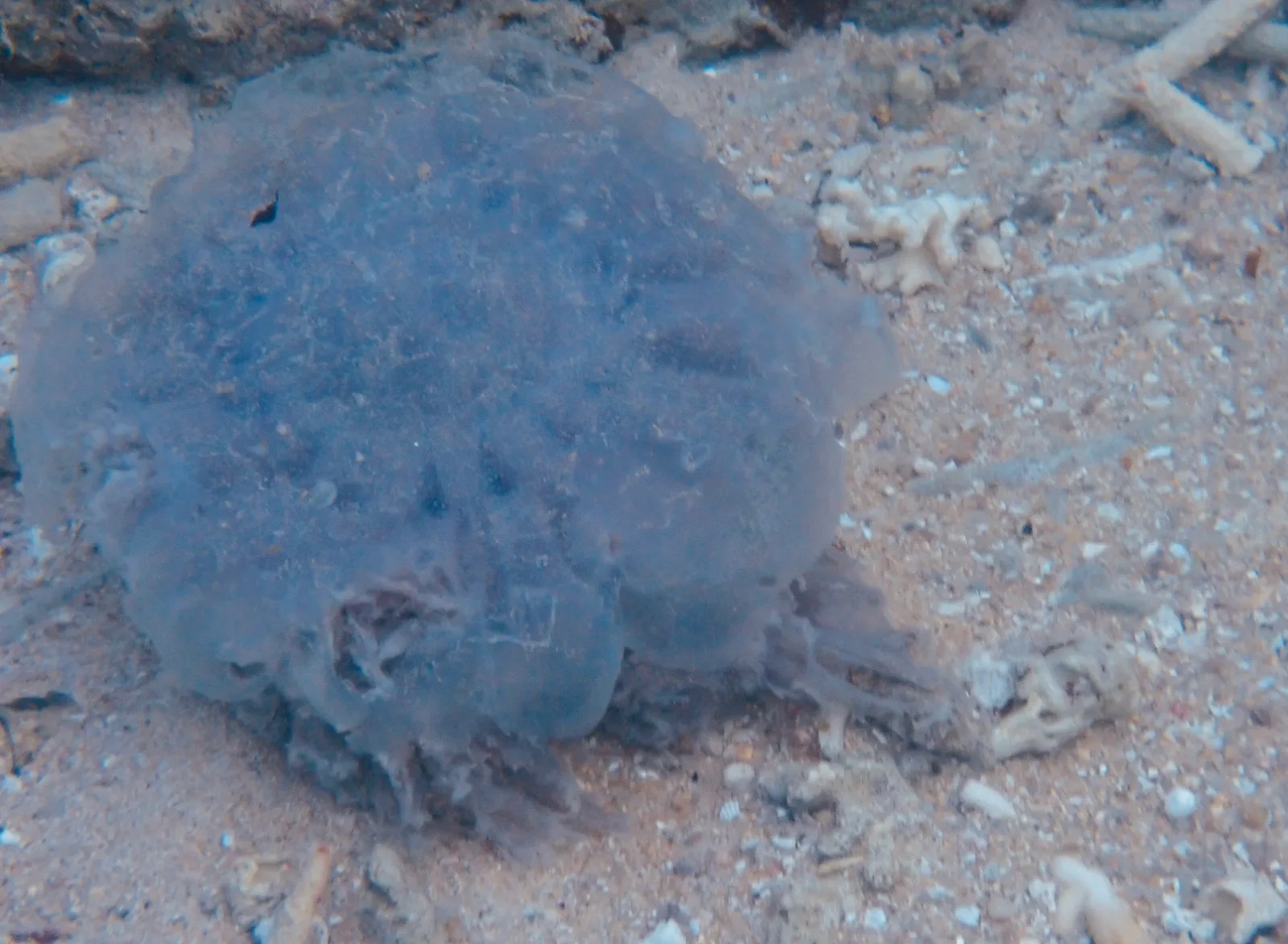
Instead of drifting gracefully on the surface, I found three lion's mane jellyfish resting on the sandy bottom, slowly being carried toward shore by the gentle current. It was a reminder that even remarkable natural events have a beginning, a peak, and eventually an end.
At the same time, the story continues to evolve. Trusted members of Koh Tao's marine community have documented sea turtles feeding on the jellyfish, capturing photos and videos of behavior many of us have never witnessed before. As unusual visitors become part of the island's marine ecosystem, they remind us that the ocean is constantly changing, and always finding its own balance.
How to Stay Safe Around Jellyfish
Seeing a lion's mane jellyfish is an unforgettable experience, but it's important to admire these beautiful animals from a respectful distance.
Their long, trailing tentacles contain microscopic stinging cells that they use to capture prey. Because the tentacles can extend several meters beyond the bell, it's best to give any jellyfish plenty of space, even if it appears to be drifting away from you.
If you're snorkeling or diving around Koh Tao, keep these tips in mind:
Never touch a jellyfish, even if it appears dead or stranded on the beach.
Stay aware of the current. A drifting jellyfish may change direction unexpectedly.
Wear appropriate protection if conditions warrant, such as a rash guard or full-body exposure suit.
Pay attention to local conditions. Dive centers and local marine groups often share information about recent jellyfish sightings.
Exit the water calmly if you notice multiple jellyfish in the area.
Be aware of the long tentacles that can stretch to several meters long.
If you are stung, notify someone nearby and seek appropriate first aid. While many jellyfish stings are mild, some can be serious, and it's always best to err on the side of caution if you experience severe pain, difficulty breathing, dizziness, or other concerning symptoms.
Like all marine life, lion's mane jellyfish deserve our respect, not our fear. Observed responsibly, they offer a rare glimpse into one of the ocean's most fascinating and graceful inhabitants.
Why Encounters Like This Make Koh Tao So Special
People often ask me what makes Koh Tao such a special place to snorkel and dive. Of course, the island is known for its sea turtles, colorful coral reefs, and incredible marine biodiversity. But what keeps me coming back day after day is the sense of possibility. Every time I enter the water, I know I might witness something I've never seen before.
I might head out hoping to photograph sea turtles and instead spend half an hour mesmerized by a drifting jellyfish. Other days I discover baby blacktip reef sharks in the shallows, stumble across a tiny seahorse clinging to floating debris, or reconnect with sea turtles I've come to recognize over the years. Every outing has the potential to become an unforgettable story.
This summer, the Lion's Mane jellyfish reminded me that even after years of exploring Koh Tao's waters, the ocean can still hold surprises. What began as an unexpected encounter became a weeks-long natural event shared by locals, divers, snorkelers, and photographers across the island.
For me, that's the real magic of Koh Tao.

Jennifer Varner
American expat living on Koh Tao since 2021. Travel consultant for solo travelers heading to Thailand. More about Jennifer.
More from Magical Marine Life Encounters
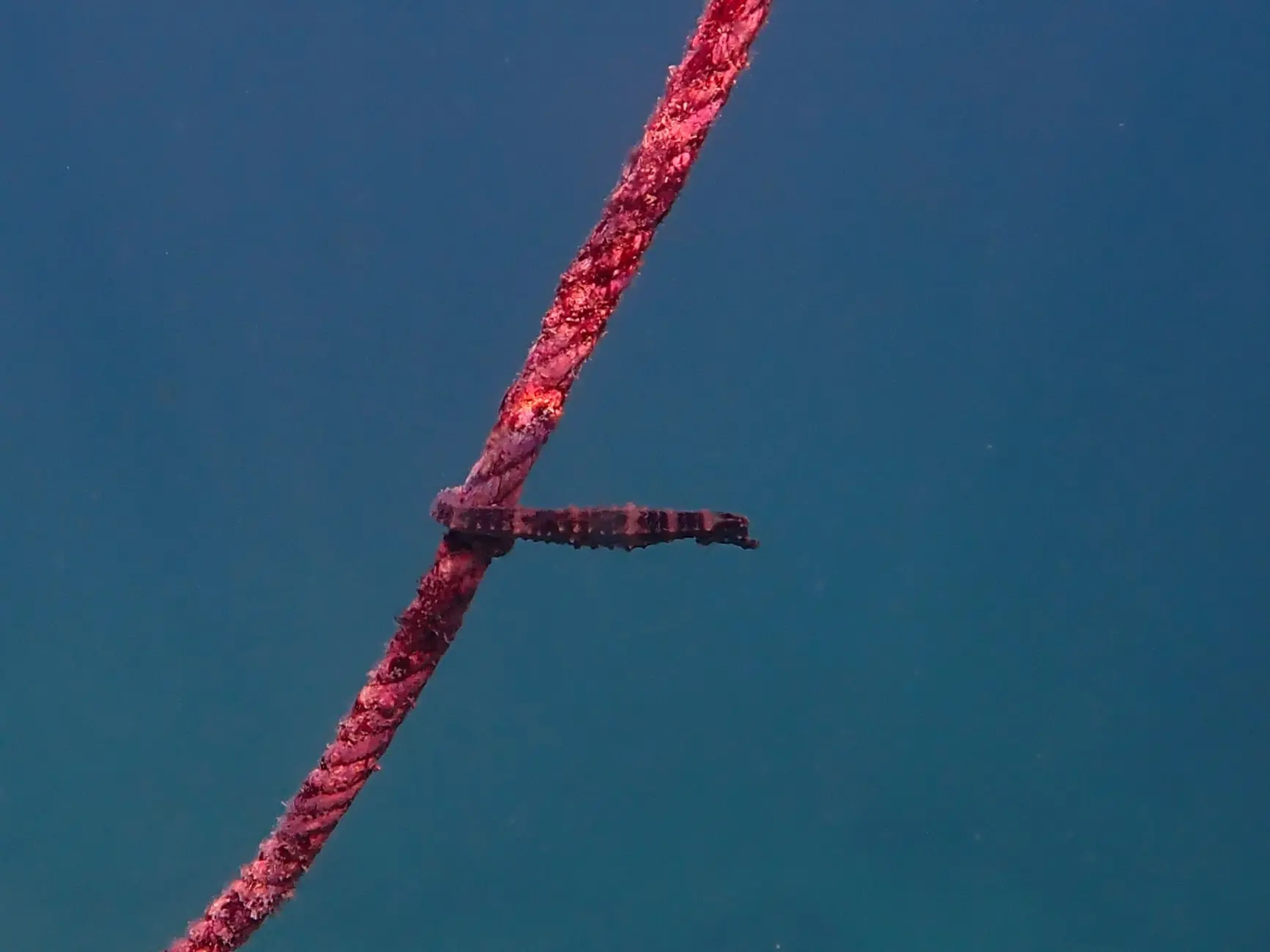
Three Magical Seahorse Encounters in Koh Tao Thailand
Seahorses are known to live in the waters around Koh Tao, but finding one feels like discovering a secret the ocean has been keeping. My first appeared while I was collecting trash in Shark Bay. The second became a tiny celebrity at Tanote Bay, with a story no one expected. Then, one morning in Shark Bay, they seemed to be everywhere. These are the stories of three magical and very different seahorse encounters.
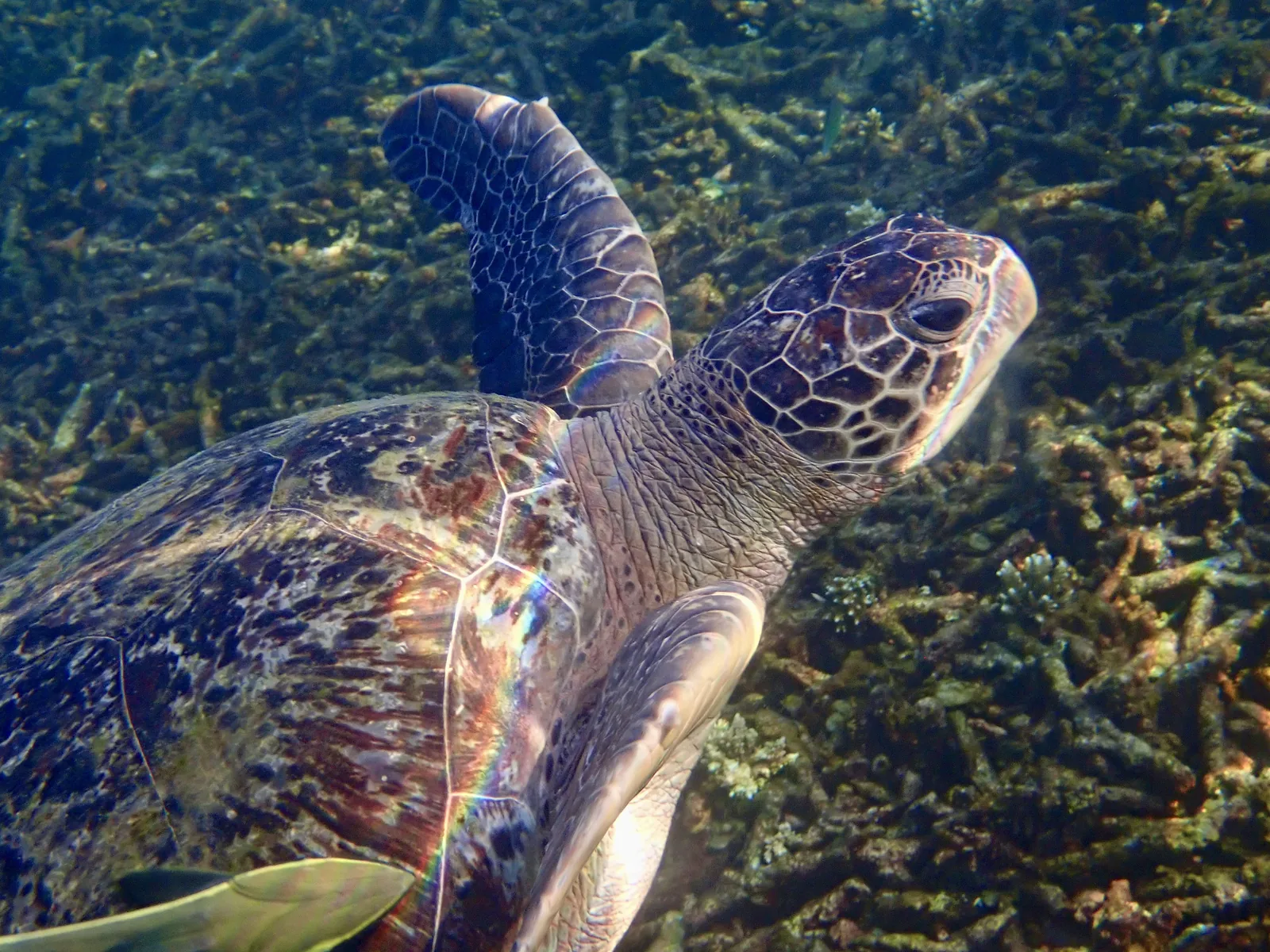
Koh Tao Sea Turtles in Shark Bay, Thailand
On the southern tip of Koh Tao lies Shark Bay , a crescent of turquoise water known for its resident sea turtles. It's one of the few places in Thailand where you can still swim alongside these wild c
Want a real conversation about your trip?
Quick Question, Trip Plan, or Full Itinerary Support. Three tiers from $45.
See the Three Tiers