Koh Tao Sea Turtles in Shark Bay: Beauty and Responsibility
- Jennifer Varner

- Dec 15, 2025
- 6 min read
Updated: 33 minutes ago

Koh Tao Sea Turtles in Shark Bay
On the southern tip of Koh Tao lies Shark Bay — a crescent of turquoise water known for its resident sea turtles. For visitors and long-time residents alike, Shark Bay and other bays around Koh Tao offer some of the most consistent turtle sightings you’ll find while snorkeling or diving in Thailand’s Gulf waters.
I have the privilege of living above Shark Bay, and I know it well. Seagrass spreads between the coral outcrops all around the bay, in water sometimes less than a meter deep. That’s the turtles’ food source and why they stick around. If you move slowly and keep your distance, they hardly react.
This is the story of the sea turtles of Shark Bay — and of the marine biologists and local citizen scientists working to protect them as tourism on Koh Tao continues to grow.

Koh Tao: The Turtle Island
Koh Tao — literally “Turtle Island” in Thai — earned its name long before backpackers arrived with masks and fins. Some say the island’s shape resembles a turtle from above. Others believe it was named for the sea turtles that once nested on its quiet beaches.
Located in the Gulf of Thailand, just north of Koh Phangan and Koh Samui, Koh Tao remained relatively isolated until the late twentieth century.
Early residents were fishermen and coconut farmers. There were no dive shops, beach bars, or daily ferry schedules.
In the 1980s, divers discovered the coral reefs surrounding the island — and everything changed. Today, an estimated 70 to 85 dive schools operate on Koh Tao — an extraordinary density for an island just 21 square kilometers in size.
But for the turtles, this island has always been home. Green sea turtles and hawksbills are the most common residents. Instead of nesting on beaches as they once did, many now spend their lives grazing in the shallow bays — Shark Bay, Aow Leuk, Sai Tong, Hin Wong, and Tanote — where coral, seagrass, and rocky reefs create perfect feeding grounds.
Meet Yorite: One of the Resident Sea Turtles of Shark Bay
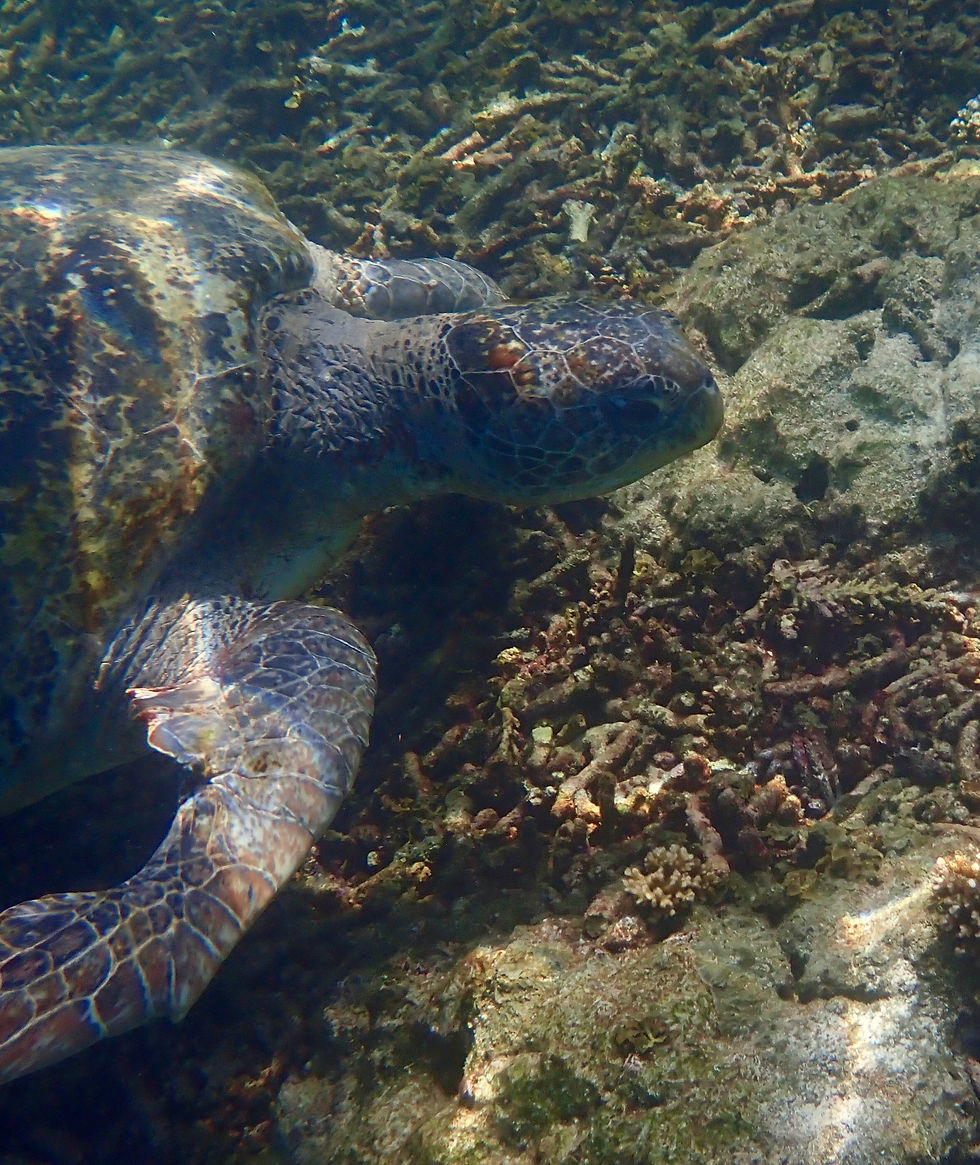
Yorite is a local favorite — a large Green sea turtle with a mangled front right flipper. The injury is obvious. So is the resilience. Yorite moves steadily through the shallows, feeding as if nothing is missing.
Yorite is one of more than thirty distinct turtles I’ve encountered in Shark Bay. Turtles are identified by the pattern of scutes on their heads — each arrangement unique, much like a human fingerprint.
Once you learn to look, you recognize them —often times by the scars left across their carapaces from boat interactions. Those injuries are visible. They tell a story.
Boat strikes are dramatic and obvious. Plastic is quieter — and often more lethal.

Turtles mistake floating plastic for food. Microplastics settle into the seagrass beds where they feed. Fragments of fishing rope and monofilament break apart and drift through the shallows. What looks like food from below can be laced with debris at sea level.
Mr Muscle: Marine Debris and the Reality Facing Sea Turtles in Koh Tao
Mr Muscle was a long-term resident of Koh Tao and one of the oldest and largest turtles known in Shark Bay. He was recognizable not just for his size, but for his presence — a steady figure in waters many of us know well.

Last year, Mr Muscle was struck by a boat, leaving a significant wound across his carapace. The local community monitored his recovery closely. The injury was serious, but he appeared to be healing.
Then his behavior changed. He became lethargic. He stayed hidden in a shallow bay. Something was wrong.
A rescue effort was organized to bring him in so veterinarians could properly assess the wound. Several determined members of the local community were able to capture him, and he was transported to Chumphon for medical care.

He did not survive.
The cause of death was not the boat strike. It was gastrointestinal obstruction from marine debris, compounded by bacterial infection linked to parasites. His digestive tract was severely blocked.
The Koh Tao island community rallied to help him. People searched for him, carried him, and held out hope. Many are heartbroken. Some take solace in knowing his final days were spent under veterinary care in Chumphon, likely more comfortable than if he had remained in the wild.
But the truth remains:
It wasn’t the visible wound that killed him. It was what he had ingested.
The Koh Tao Turtles Community

One of the most inspiring things about life on Koh Tao is how much the island rallies around its marine life. Turtles aren’t just a passing attraction — they’re part of the island’s identity.
The Koh Tao Turtles Facebook group began as a small project years ago and has grown into a living archive of the island’s turtle population. Locals, dive instructors, and travelers share photos of turtles they encounter. Individual turtles are identified by the unique markings, known as scutes, on their heads. These images help researchers and conservationists track individuals, identify new ones, and monitor their health.
One of the biggest draws of the group is that if you spot a turtle that hasn’t been identified before, you get to name it. It’s a small but meaningful reward for those patient enough to look closely and care deeply.
Protecting Paradise: Conservation & Respect

With more people visiting Koh Tao every year, protecting its marine life has never been more important. The island’s reefs and turtles are resilient, but they’re also fragile — one careless fin kick or curious hand can do real damage.
Whenever I’m in the water and see someone getting too close to a turtle, I speak up. Most people don’t mean harm — they’re just excited — but excitement can easily cross the line into disturbance.
Sometimes a calm reminder works, but many times a bit of fear does. Either way, it’s worth it. It’s illegal to touch or harass any marine life in Thailand, and the government takes those laws seriously.
These turtles have survived decades of storms, nets, and noise; they deserve at least a few meters of peace.

How to Swim Responsibly with Sea Turtles in Thailand:
Keep a minimum distance of three meters (10 feet).
Never touch or chase turtles — let them approach if they choose.
Avoid standing on or kicking coral; use slow, controlled fin movements.
Do not block their path to the surface — turtles need air.
Use reef-safe sunscreen or, better yet, wear a rash guard.
Don’t feed or bait marine animals.
Leave no trace — take everything you brought into the ocean back out with you.
Conservation on Koh Tao isn’t just for scientists or dive professionals. It’s something every swimmer and snorkeler can practice. Being a positive role model is how true protection starts.

Frequently Asked Questions About Koh Tao Sea Turtles
Can you see sea turtles in Shark Bay, Koh Tao?
Yes. Shark Bay is one of the most reliable places to see green sea turtles in Koh Tao. They regularly graze in the shallow seagrass beds close to shore.
What kind of sea turtles live in Koh Tao?
The most commonly seen species in Koh Tao is the green sea turtle. They are often spotted in Shark Bay and other shallow snorkeling areas around the island.
Is it safe to snorkel with turtles in Koh Tao?
Yes, but snorkelers should maintain distance, avoid touching marine life, and never chase turtles. Responsible snorkeling helps protect both the turtles and their habitat.
Why is conservation important for Koh Tao sea turtles?
Plastic pollution, boat traffic, and habitat disruption threaten sea turtles in Koh Tao. Protecting seagrass beds and reducing waste are essential for their survival.
What happened to Mr Muscle in Koh Tao?
Mr Muscle became a symbol of the impact marine debris can have on sea turtles in Koh Tao, highlighting the importance of reducing pollution in the Gulf of Thailand.
The Future of Sea Turtles in Shark Bay, Koh Tao
Shark Bay is still beautiful. The water is clear. Seagrass still spreads through the shallows of Koh Tao — and the sea turtles are still here.
Through the work of the Koh Tao Turtles community and the growing awareness among visitors, there’s hope that these gentle creatures will continue to thrive here.
Every photo shared, every responsible snorkeler, and every moment of restraint add up to protection. The turtles of Koh Tao, Thailand, remind us that paradise isn’t something we take — it’s something we cherish and protect.

About the author
Jennifer Varner is a PADI Divemaster living in a hut overlooking Shark Bay on Koh Tao and the creator of Gal Goes Solo. She shares real-world travel stories and offers personal travel consulting for travelers looking for practical, lived-in guidance.


Comments